
OKR — Objectives and Key Results in Modern Enterprise Steering (Global Edition)
Short Definition
OKR (Objectives & Key Results) is a goal‑setting framework designed to create clarity, focus, and measurable outcomes. Originally developed at Intel and later popularized by Google, OKR has become a global standard for aligning teams and translating strategy into action.
Within the Enterprise Universe OS, OKR plays a specific role: It is a legacy goal system that remains useful for communication and alignment, but is functionally replaced by Seismic, Quasar, and Galaxy — the modern steering architecture of the Enterprise Universe OS.
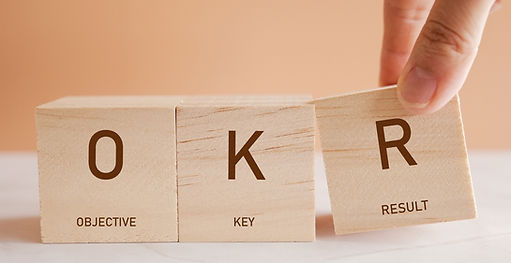
What OKR Is — and What It Is Not
Objectives
Qualitative, directional statements describing what should be achieved.
Key Results
Quantitative, measurable indicators showing whether the objective has been achieved.
OKR is not:
a forecast
a plan
a strategy
a prioritization system
a resource allocation mechanism
OKR is a goal communication system, not a steering system.
Why OKR Was Created
OKR emerged to solve three recurring problems in traditional goal systems:
goals were vague
goals were not measurable
goals were not transparent
OKR introduced clarity, measurability, and alignment — especially valuable in fast‑moving, technology‑driven environments.
Why OKR Often Fails in Practice
Despite its simplicity, OKR frequently fails due to predictable issues:
objectives are too ambitious
key results are not measurable
OKRs are not reviewed regularly
OKRs are mixed with bonuses or performance ratings
OKRs are used as a political tool
OKRs are confused with strategy or planning
The most critical issue:
OKRs create Forecast Bias when they influence forecasting.
This must be addressed explicitly.
OKR and Forecasting — The Hidden Interaction
OKR and forecasting are fundamentally different systems:
OKR defines ambition
Forecasting describes reality
When OKRs influence forecasts, bias emerges:
ambitious OKRs → optimistic forecasts
conservative OKRs → sandbagging
bonus‑linked OKRs → political forecasts
team‑driven OKRs → manipulated projections
Therefore, the Enterprise Universe OS follows a strict rule:
Forecasts must influence OKRs. OKRs must never influence forecasts.
Forecasts show what is. OKRs describe what should be.
Why OKR Is Not Sufficient for Enterprise Steering
OKR answers:
What do we want to achieve?
Enterprise steering requires answers to:
What is possible?
What is valuable?
What is feasible?
What is capacity‑conform?
What is risk‑adequate?
What is strategically consistent?
What is operationally executable?
OKR is an output layer. Enterprise Universe OS provides the input logic.
The Enterprise‑OS Alternative: Seismic + Quasar + Galaxy
Seismic Opportunity Radar
Detects opportunities, risks, and market movements early.
Quasar Decision Model
Evaluates options based on value, risk, capacity, feasibility, and strategic fit.
Galaxy Strategic Architecture
Structures initiatives, programs, and strategic movements.
Together, they form a complete steering system:
Seismic shows what is moving.
Quasar shows what makes sense.
Galaxy shows what will be executed.
OKR becomes optional — but still useful for communication.
How OKR Fits into the Enterprise Universe OS
OKR is positioned as a Legacy Layer:
still usable
still understandable
still compatible
but no longer the primary steering mechanism
OKR becomes the communication layer for goals derived from Seismic + Quasar + Galaxy.
OKR and Forecast Accuracy & Bias
Forecast Accuracy & Bias ensure that OKRs are based on reality rather than wishful thinking.
The correct sequence is:
Forecast Accuracy & Bias → reveals reality
Rolling Forecasts → show movement
Adaptive Planning → translates movement into action
Seismic + Quasar → evaluate options
Galaxy → structure initiatives
OKR → communicate goals
OKR is the last step — not the first.
OKR and Rolling Forecasts
Rolling Forecasts answer:
What is likely to happen?
OKRs answer:
What do we want to achieve?
Both must be aligned but strictly separated.
Cross‑Reference Table (EN ↔ DE)
English Article | German Article |
Objectives & Key Results (OKR) | |
Adaptive Planning | Adaptive Planning (DE) |
Dynamic Resource Allocation | Dynamische Ressourcenallokation (DE) |
Performance Architecture | Performance Architecture (DE) |
Decision Architecture (DE) | |
NextLevel Statement
OKR is a strong communication tool — but not a steering system. Modern enterprises need both ambition and reality. In the Enterprise Universe OS, this connection is created through Forecast Accuracy, Rolling Forecasts, Adaptive Planning, Seismic, Quasar, and Galaxy. OKR remains relevant, but it is no longer the core of enterprise steering. It becomes the language of goals — not the logic behind them.
FAQs OKR - NextLevel
1. What is the core purpose of OKRs?
The core purpose of OKRs is to create clarity about what an organization wants to achieve and how success will be measured. Objectives define direction; Key Results define measurable outcomes. OKRs help teams align and focus — but they do not replace planning, forecasting, or strategy.
2. Why do OKRs fail in many organizations?
OKRs often fail because they are introduced without cultural readiness. Common issues include unrealistic goals, vague Key Results, lack of review cycles, and mixing OKRs with bonuses or performance ratings. OKRs require discipline, transparency, and regular reflection to work effectively.
3. How should Objectives be formulated?
Objectives should be qualitative, inspirational, and easy to understand. They describe what should be achieved — not how. A good Objective motivates action without being vague or abstract.
4. How should Key Results be formulated?
Key Results must be measurable, time‑bound, and unambiguous. They describe outcomes, not activities. A Key Result should show a clear change in performance or behavior.
5. Why do OKRs create pressure when implemented incorrectly?
If OKRs are tied to compensation, performance ratings, or political expectations, they become stressful. Teams start optimizing for OKR scores instead of business outcomes. OKRs must remain independent from bonus systems to stay honest.
6. How do OKRs influence Forecast Bias?
OKRs can distort forecasts when teams adjust projections to make OKRs appear achievable. Ambitious OKRs lead to optimistic forecasts; conservative OKRs lead to sandbagging. Forecasts must remain independent to avoid systematic bias.
7. Why can OKRs never replace forecasting or planning?
OKRs describe ambition, not reality. Forecasts describe what is likely to happen. Planning describes how to act. OKRs cannot predict demand, capacity, or financial outcomes — they are not a steering system.
8. How often should OKRs be reviewed?
OKRs should be reviewed monthly or at least quarterly. Regular check‑ins ensure alignment, detect obstacles early, and prevent drift. Annual OKRs without interim reviews almost always fail.
9. How many OKRs should a team have?
Most teams should have 1–3 Objectives and 3–5 Key Results. More OKRs dilute focus and reduce execution quality. OKRs are about prioritization — not listing everything a team does.
10. Why do OKRs often turn into task lists?
If Key Results describe activities instead of outcomes, OKRs become to‑do lists. Key Results must measure impact, not effort. Otherwise OKRs lose their strategic value.
11. How do OKRs improve cross‑functional alignment?
OKRs make priorities visible across teams. Shared Objectives and linked Key Results reduce silo behavior and clarify dependencies. Alignment emerges from transparency — not from hierarchy.
12. Why do OKRs require cultural maturity?
OKRs demand openness, honesty, and willingness to expose unfinished work. Organizations with strong political dynamics struggle because OKRs reveal gaps and misalignment. OKRs work best in cultures that value learning over blame.
13. How do OKRs interact with Rolling Forecasts?
Rolling Forecasts show what is likely to happen. OKRs define what should be achieved. OKRs must be based on forecast reality — not the other way around.
14. How do OKRs relate to Forecast Accuracy & Bias?
OKRs can create bias if they influence forecasts. Forecast Accuracy & Bias must be measured first, then OKRs set based on unbiased reality. OKRs must never distort forecasting.
15. Why are OKRs not a strategy?
OKRs describe goals, but not the analysis, options, or resource decisions behind them. Strategy comes first. OKRs communicate strategic intent — they do not replace strategic thinking.
16. How do OKRs fit into the Enterprise Universe OS?
OKRs are a Legacy Layer in the Enterprise Universe OS. Goals are derived through Seismic, Quasar, and Galaxy — OKRs simply communicate them. OKRs are optional, but still useful for alignment.
17. Why are OKRs replaced by Seismic & Quasar?
Seismic detects opportunities and risks. Quasar evaluates options based on value, risk, and capacity. Galaxy structures initiatives. Together, they form a complete steering system that makes OKRs functionally redundant.
18. Should organizations abandon OKRs entirely?
No. OKRs remain valuable as a communication tool. They simply no longer serve as the primary steering mechanism.
19. How can organizations prevent political OKRs?
By enforcing clear rules: OKRs are not bonus‑relevant, not negotiable, and not tactical. They must be based on forecast reality and strategic priorities. Transparency prevents manipulation.
20. How should OKR success be measured?
Success is measured not only by completion, but by:
clarity
focus
prioritization
collaboration
learning progress
OKRs are a learning system — not a performance rating system.
21. How should OKRs be introduced in mid‑sized companies?
Gradually, starting with a few teams, clear rules, and proper training. OKRs must fit the culture and should not be introduced as a Silicon‑Valley trend. Start simple, scale carefully.
22. Do OKRs work in regulated industries?
Yes — as long as OKRs focus on operational priorities rather than compliance tasks. OKRs should support value creation, not regulatory obligations.
23. Do OKRs work in non‑profit organizations?
Very well, provided Key Results measure impact rather than activity. OKRs help non‑profits focus limited resources on the highest‑value outcomes.
24. How can organizations keep OKRs flexible?
Through regular reviews, adjustments, and open discussions. OKRs must evolve with new information — they are not static commitments.
25. What is the biggest misconception about OKRs?
That OKRs are a steering system. OKRs are a goal‑communication system. Steering comes from forecasting, planning, Seismic, Quasar, and Galaxy — not from OKRs.